
Course Overview
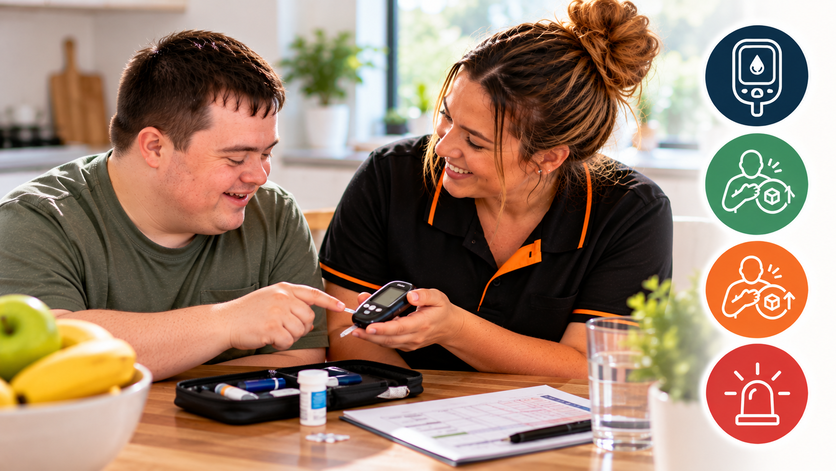
Build the practical knowledge needed to safely support a person living with diabetes. Learn how blood glucose levels can affect a person, how to follow their individual Diabetes Support Plan, and how to recognise and respond to hypoglycaemia, hyperglycaemia and diabetes-related emergencies.
This course provides the foundation required before completing Safe Insulin Support and Administration training.
Why take this course?
Supporting someone with diabetes involves more than understanding the condition itself. Support workers need to know what to look for during everyday support, what information needs to be monitored and recorded, and when changes or concerns need to be escalated.
This course explores the practical responsibilities involved in supporting a person with diabetes. You’ll learn about the differences between Type 1 and Type 2 diabetes, how and why blood glucose levels can change, and the signs that may indicate blood glucose is becoming too low or too high.
You’ll also explore blood glucose monitoring, diabetes medications, lifestyle support, sick day management and potential short- and long-term complications associated with diabetes.
Practical scenarios throughout the course will help you apply this knowledge to everyday support, make safer decisions and understand the boundaries of your role as a support worker.
Important Disclaimer
This course is provided for information and educational purposes only. It is designed to increase your understanding of the topic and provide theoretical knowledge to support your professional development.
Upon successful completion, you will receive a Certificate of Completion. This certificate confirms that you have completed the learning content and any associated assessments within this course. It is not a formal qualification, nationally recognised certification, licence, or accreditation, and it does not, on its own, demonstrate practical competency or authorise you to perform workplace tasks.
This course provides the theoretical knowledge required to support safe manual handling practices. It is not a substitute for practical workplace training, supervised competency assessments, organisation-specific policies and procedures, or workplace-specific manual handling instruction.
Where practical skills are required, learners must complete any additional hands-on training, workplace induction, competency assessments, and ongoing supervision required by their employer or applicable legislation.
It is the responsibility of each learner and their employer to ensure that all work is carried out in accordance with current workplace policies, relevant legislation, applicable Australian Standards, and industry best practice.
By undertaking this course, you acknowledge and agree that the Certificate of Completion is evidence of participation only and should not be relied upon as proof of professional competence or eligibility to perform manual handling tasks without appropriate workplace training and assessment.